
TCGplayer Market Price Sits Above the Cheapest Copy
We read the full listing board on the priciest card in each of the last 13 English sets. The market price was above the cheapest buyable copy every time.
Open the Prismatic Evolutions Umbreon ex page on TCGplayer this morning and the first number the site shows you is a market price of $1,186.84. Scroll down into the actual listings and the ten cheapest copies for sale are Chinese or Japanese, two of the next three are graded slabs that somebody filed under the raw card, and the first price two different English sellers agree on is $1,029.98 delivered. The number at the top of the page is $157 higher than the copy you can put in a cart.
That is not a broken page, and it is not unique to Umbreon. We pulled the full listing board for the most expensive single in each of the last thirteen English sets on November 10, read every listing down to the first price at least two sellers agreed on, and compared it to the market price TCGplayer published for that card the same morning. The market price sat above the cheapest replaceable copy on all thirteen, by as little as nothing and as much as 15 percent.
What TCGplayer's market price actually measures
TCGplayer's own help pages are clear about this, and worth reading once if you have never looked. Market price is built from completed sales on TCGplayer, averaged over recent transactions, and it deliberately ignores what sellers are currently asking. So it records what the card sold for rather than what the next copy will cost you. TCGplayer describes it as "the best suggested retail price of a product."
The same help page explains the problem in the opposite direction, using an old Magic card as the example. Only a few sellers still list it, every copy priced near the market price sells quickly, and what gets left behind on the page is the expensive stock. Pokemon chase cards behave the same way on a quiet board.
The thirteen cards we checked
Every card below is the highest priced single in its set, which is a rule we picked before looking at any of the numbers so we could not cherry pick thin boards. Prices are delivered to a US address, read on November 10, 2026.
| Card | Set | Market price | Cheapest copy two sellers agree on | Market above that | Copies listed |
|---|---|---|---|---|---|
| Lillie's Clefairy ex 184/159 | Journey Together | $73.67 | $73.67 | 0.0% | 215 |
| Mega Zygarde ex 124/088 | Perfect Order | $82.65 | $81.98 | 0.8% | 191 |
| Mega Greninja ex 122/086 | Chaos Rising | $108.88 | $108.48 | 0.4% | 183 |
| Mega Darkrai ex 116/084 | Pitch Black | $131.04 | $126.49 | 3.6% | 195 |
| Mega Lucario ex 188/132 | Mega Evolution | $196.44 | $186.49 | 5.3% | 109 |
| Team Rocket's Mewtwo ex 231/182 | Destined Rivals | $303.93 | $302.99 | 0.3% | 133 |
| Mega Rayquaza ex 138/103 | Delta Reign | $308.69 | $297.98 | 3.6% | 52 |
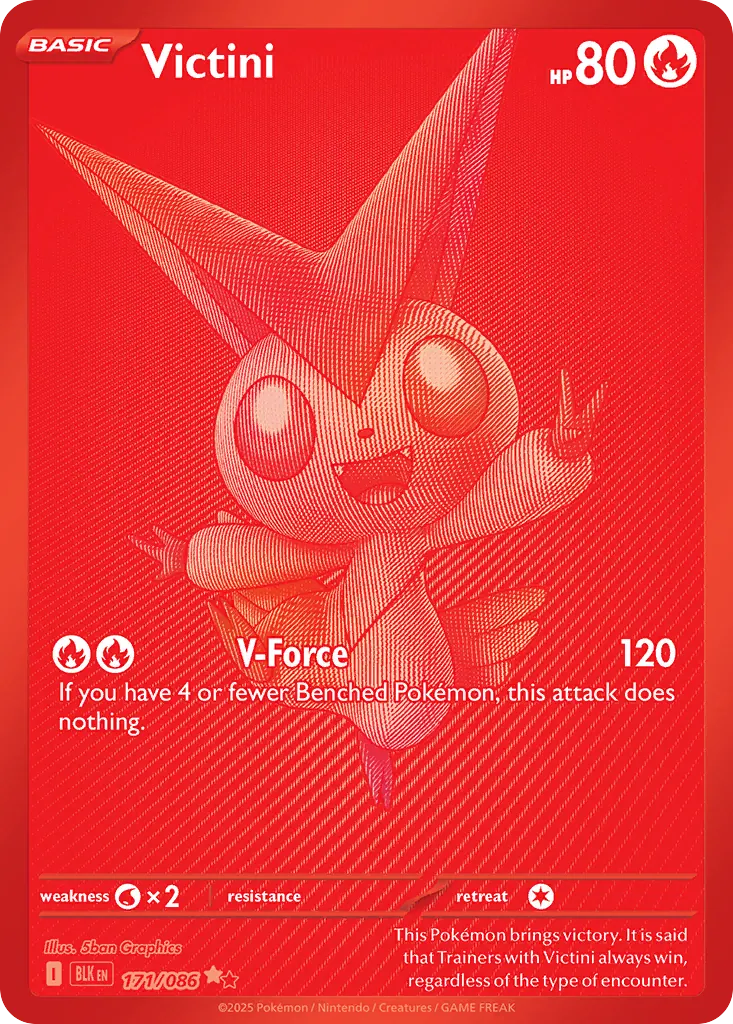
| Victini 172/086 | White Flare | $528.34 | $485.00 | 8.9% | 24 |
| Mega Charizard X ex 125/094 | Phantasmal Flames | $565.14 | $540.00 | 4.7% | 119 |
| Mega Gengar ex 284/217 | Ascended Heroes | $606.90 | $575.94 | 5.4% | 142 |
| Victini 171/086 | Black Bolt | $613.44 | $547.99 | 11.9% | 30 |
| Umbreon ex 161/131 | Prismatic Evolutions | $1,186.84 | $1,029.98 | 15.2% | 106 |
| Mew R/RGB | 30th Celebration | $4,492.45 | $3,991.30 | 12.6% | 17 |
The middle of that list is a gap of about 4.7 percent, which is roughly what shipping and a seller's rounding will cost you anyway. Four of the thirteen were 8.9 percent or wider, and those four are the ones worth understanding.
The gap opens on boards where nobody is selling
Line the table up by how many copies are listed and the pattern falls out on its own. The three thinnest boards in the group belong to Mew R/RGB with 17 copies, the White Flare Victini with 24, and the Black Bolt Victini with 30. Their gaps are 12.6 percent, 8.9 percent and 11.9 percent. The four deepest boards, every one of them over 180 copies, came in at 0.0, 0.8, 0.4 and 3.6 percent.
The reason is the averaging window. A card with 200 copies for sale sells several times a week, so the average TCGplayer publishes is made of sales from the last few days and it tracks the ladder closely. The Black Bolt Victini has 30 copies sitting there and it has been out since July 2025. Whatever handful of sales went into its $613.44 happened a while ago, sellers have cut their asks since, and the published average has not caught up.
Mega Rayquaza ex from Delta Reign is the useful exception. It only has 52 copies listed, which should make it a thin board, and its gap is 3.6 percent. The set came out on November 6, four days before we read this, so every sale in that average is new. How recently the card last sold matters more than how many copies are sitting on the page.
Umbreon ex is a different failure
Umbreon ex has 106 copies listed, which puts it in the middle of the group, and it still posted the widest gap in the table. The listings explain it. The ten cheapest copies on that board are Chinese or Japanese cards sitting under the English product, including a Japanese PSA 9 at $400.45 and a batch of Chinese copies at $6.48. Two of the next three are graded English slabs, a PSA 8.5 at $950 and a PSA 9 at $1,000.99, listed as if they were raw singles.
So the bottom of the board is full of things that are not the card, and TCGplayer's own low price for Umbreon ex that morning was $964.78, which is under every ordinary English copy on the page. We found the same shape on sealed product in October, when seven of nine Elite Trainer Box boards had a cheapest listing that was not a box. It happens on singles too, and on expensive singles it is worse, because a $6 Chinese copy and a $1,030 English copy live on the same page.
AnonTCG walks through how cheap listings end up dragging on a card's published market price in the video below:
Is TCGplayer's market price accurate?
For what it measures, yes. It is an honest average of what sold. The trouble starts when you use it as the price you will pay or the price you will get, because it is neither of those, and on a quiet board it is 9 to 15 percent away from both.
This matters most if you are doing grading math. Every break even calculation starts with what the raw card costs you, and we have shown before that a few dollars of raw cost decides whether a submission makes money. Price the raw side off a market number that is 15 percent high and you will talk yourself out of submissions that work. Price it off a market number that has not caught a fall and you will do the opposite. The Mega Greninja ex in the table above is a card we got burned on this way earlier in the year.
What to do instead
Open the listings. That is the whole trick, and it takes about forty seconds.
Sort by price plus shipping, then scroll past anything with a seller note mentioning another language or a grade, and find the first point where two or three sellers land within a couple of percent of each other. That number is the floor you can actually buy at, and roughly the number you have to beat if you are the one selling. One listing sitting alone well under a cluster is usually a single damaged copy or something that is not the product at all. The Flipr app reads the same listing boards when it scores a card, for exactly this reason.
One forward call to put on the record. Umbreon ex's published market price should come down to meet its listing floor rather than the floor climbing to it, because the stale number on that board is the sales average and the listings have already moved. If the market price prints under $1,100 by late December with the floor still near $1,030, that read was right. If English copies are asking above $1,150 by then, it was wrong, and we will say so.
Want to flip smarter, not harder?
Flipr's free toolkit surfaces the most profitable cards to grade and the spreads to arbitrage, refreshed every 30 minutes. Twelve tools, zero subscriptions.
Open FliprMore on PSA flipping
TCGplayer's Cheapest Elite Trainer Box Is a $12.99 Booklet
We walked nine Elite Trainer Box listing boards on October 14. On seven of them the cheapest listing is not a sealed box, and the gap runs as wide as 90%.
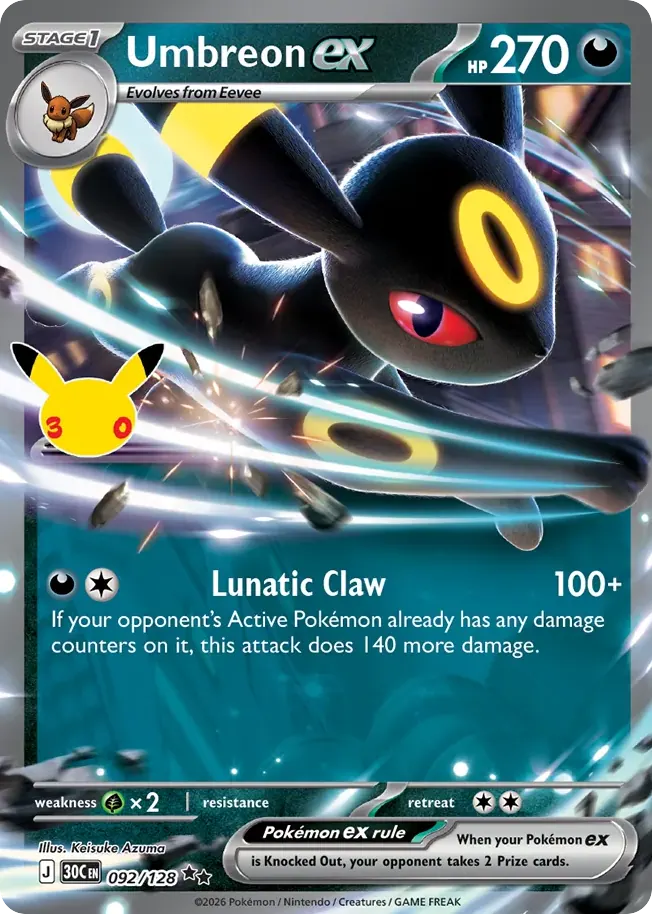
Umbreon ex 110 Presale Price Fell From $500 to $199
Four 30th Celebration ex promos lost half their asking price in a week. Every $199 listing belongs to the same shop, and not one of the four has sold yet.
CGC 10 Pokemon Cards Sell for About Half a PSA 10
We read every recorded eBay sale of six graded Pokemon chase cards. A CGC Gem Mint 10 sold 23 to 55% under the PSA 10 of the same card, every time.